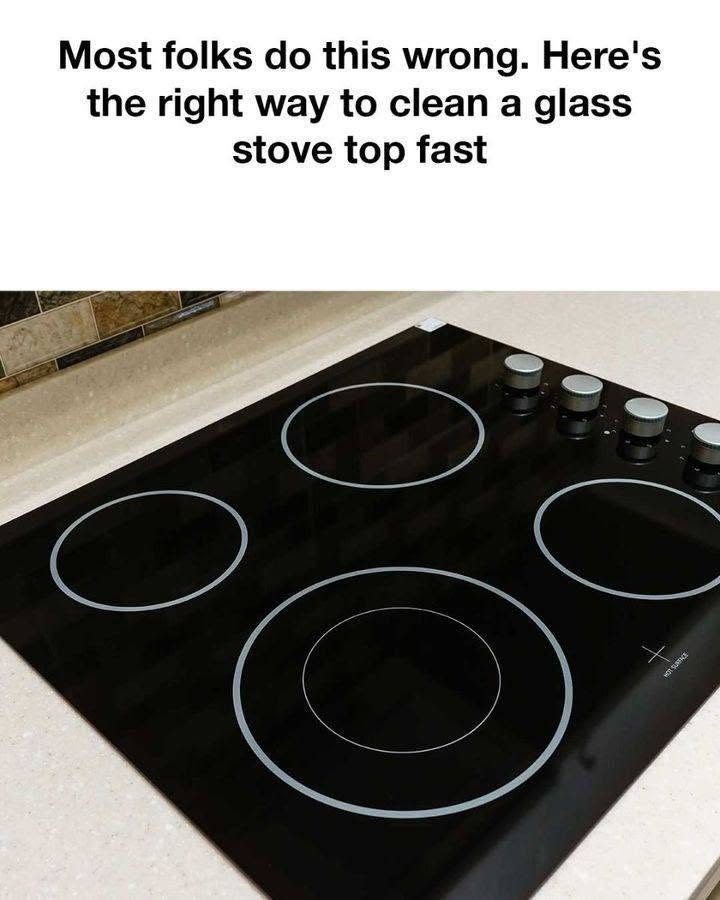

A glass stovetop can look difficult to clean, especially when grease and cooked-on food have hardened onto the surface. The key is letting the residue soften before you scrub instead of attacking the glass with an abrasive tool.
What You’ll Need
- Soft microfiber cloth
- Warm water
- A small amount of dish soap
- Baking soda
- Non-abrasive sponge
- Glass-stovetop scraper, if recommended by your manufacturer
Step 1: Let the Stovetop Cool Completely
Turn off all burners and allow the surface to cool.
Never pour cold water onto a hot glass stovetop. A sudden temperature change can damage the glass.
Step 2: Remove Loose Debris
Use a dry microfiber cloth to gently remove crumbs and loose particles.
Don’t drag hard objects across the surface because they can scratch the glass.
Step 3: Soften the Stuck-On Food
Place a warm, damp cloth over the stubborn area for several minutes.
For particularly stubborn residue, sprinkle a small amount of baking soda over the damp surface first, then place the warm cloth over it.
The goal is to soften the buildup rather than immediately scrape it.
Step 4: Gently Clean the Surface
Add a little dish soap to a damp, non-abrasive sponge and gently wipe the stovetop.
For burned-on residue that remains, use a razor-style glass stovetop scraper only if your appliance manufacturer permits it. Keep the scraper at the recommended angle and use gentle pressure.
Step 5: Wipe Away the Cleaner
Use a clean, damp microfiber cloth to remove all remaining soap and baking soda.
Then dry the surface with another clean cloth to prevent streaks.
What NOT to Do
Avoid:
- Steel wool
- Abrasive scouring pads
- Harsh powdered cleaners
- Scraping with knives
- Cleaning while the surface is hot
- Spraying excessive liquid around controls or burner openings
Also, don’t assume every homemade cleaning mixture is safe for every stovetop. Check your manufacturer’s instructions, especially if the surface has a special coating.
The Fast-Cleaning Secret
The biggest mistake is scrubbing too soon.
Instead:
Cool the surface → soften the residue → gently wipe → scrape only when appropriate → rinse and dry.
That approach usually requires much less effort and reduces the chance of scratching or damaging the glass.