
Creamy Paprika Steak Shells
Prep time: 20 minutes
Cook time: 30 minutes
Total time: 50 minutes
Servings: 4–6
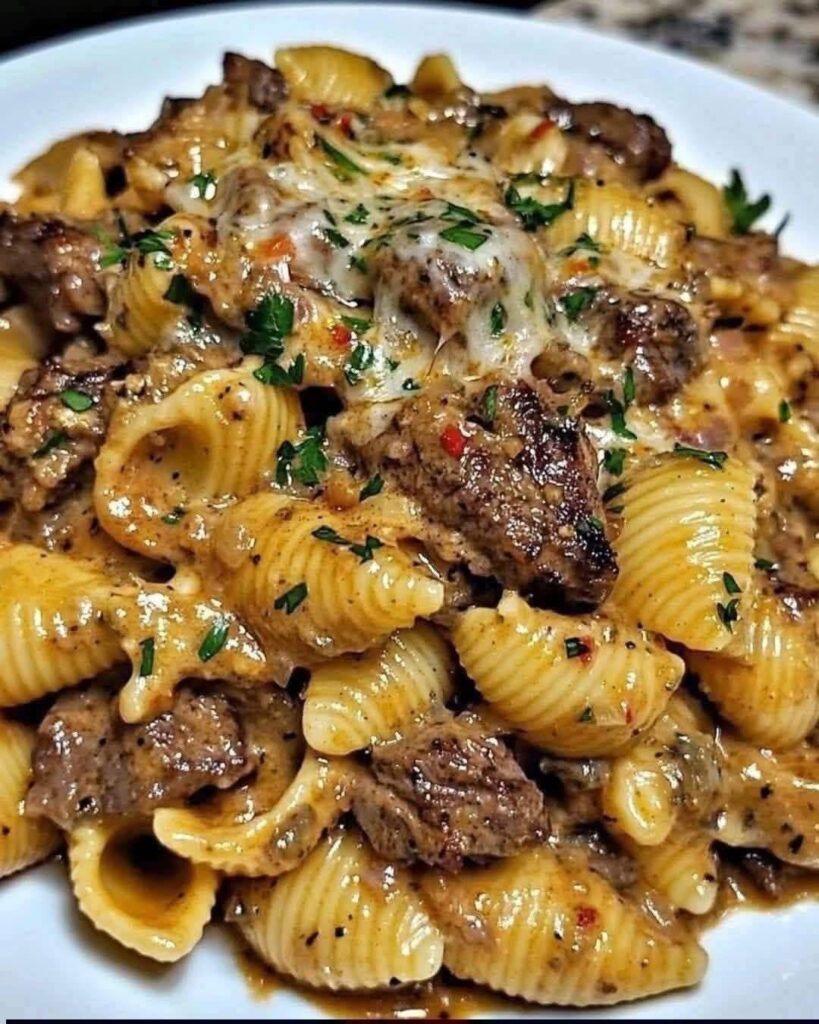
Creamy Paprika Steak Shells is the kind of hearty pasta dinner that feels like comfort food but still has plenty of bold flavor. Tender strips of seared steak are tossed with pasta shells in a silky paprika cream sauce made with garlic, onion, beef broth, Parmesan, and a touch of Dijon mustard. The shells are especially good here because they catch little pools of the creamy sauce.
Ingredients
For the steak
- 1 lb (450 g) sirloin steak, ribeye, or strip steak
- 1 tbsp olive oil
- 1 tsp paprika
- ½ tsp smoked paprika
- ½ tsp garlic powder
- ½ tsp salt
- ¼ tsp freshly ground black pepper
- 1 tbsp butter
For the pasta
- 12 oz (340 g) medium pasta shells
- 1 tbsp salt, for the pasta water
- ½ cup reserved pasta water
For the creamy paprika sauce
- 2 tbsp butter
- 1 small yellow onion, finely diced
- 4 cloves garlic, minced
- 1½ tbsp sweet paprika
- 1 tsp smoked paprika
- ½ tsp Italian seasoning
- ¼ tsp cayenne pepper, optional
- 1 tbsp all-purpose flour
- 1 cup (240 ml) beef broth
- 1 cup (240 ml) heavy cream
- 1 tbsp Dijon mustard
- ¾ cup (75 g) freshly grated Parmesan
- ½ tsp salt, plus more to taste
- ½ tsp black pepper
- 1 tsp Worcestershire sauce, optional
For finishing
- 2 tbsp chopped fresh parsley
- Extra Parmesan
- Freshly cracked black pepper
- A small pinch of smoked paprika
Instructions
1. Prepare the steak
Take the steak out of the refrigerator about 15–20 minutes before cooking. Pat it thoroughly dry with paper towels. Removing excess moisture helps the steak develop a much better browned crust.
Slice the steak into thin strips, cutting against the grain. This makes the finished steak noticeably more tender.
Place the steak in a bowl and season with paprika, smoked paprika, garlic powder, salt, and black pepper. Toss well so every piece is coated.
Don’t add too much seasoning at this stage because the sauce will also contain Parmesan, broth, and Worcestershire sauce, all of which contribute salt and flavor.
2. Cook the pasta
Bring a large pot of water to a vigorous boil. Add the salt, then add the pasta shells.
Cook according to the package directions until the shells are al dente. You want them slightly firm because they’ll continue cooking briefly in the sauce.
Before draining, scoop out about ½ cup of pasta water and set it aside.
Drain the pasta. Don’t rinse it—the starch left on the shells helps the creamy sauce cling to them.
3. Sear the steak
Heat a large skillet over medium-high to high heat. Add the olive oil and allow it to become hot.
Add the steak in a single layer. If your skillet is small, cook the steak in two batches rather than overcrowding the pan.
Sear for approximately 1–2 minutes per side, depending on the thickness of the strips. You want a nicely browned exterior while keeping the inside tender.
Transfer the steak to a plate.
Add 1 tablespoon of butter to the hot skillet and let it melt. Use a wooden spoon or spatula to scrape up some of the browned bits from the bottom of the pan.
These browned bits are extremely flavorful and will become part of the sauce.
4. Sauté the onion and garlic
Reduce the heat to medium.
Add the remaining 2 tablespoons of butter to the same skillet. Once melted, add the diced onion.
Cook for approximately 4–5 minutes, stirring occasionally, until the onion becomes soft and translucent.
Add the minced garlic and cook for another 30–60 seconds.
Be careful not to brown the garlic too much. Burnt garlic can make the entire sauce taste bitter.
5. Add the paprika
Add the sweet paprika, smoked paprika, Italian seasoning, and cayenne pepper if you’re using it.
Stir constantly for about 30 seconds.
Cooking the paprika briefly in the butter helps release its aroma and gives the sauce a deeper, more rounded flavor.
Don’t cook the paprika for too long over high heat, however, because ground spices can burn quickly.
6. Make the sauce base
Sprinkle the flour over the onion and spice mixture.
Stir continuously for about 1 minute. The flour will combine with the butter and create a light roux that helps thicken the cream sauce.
Slowly pour in the beef broth while whisking or stirring constantly.
Scrape the bottom of the skillet as you pour. The broth will loosen all those caramelized steak bits from the pan.
Allow the mixture to simmer for approximately 2–3 minutes.
7. Add the cream
Reduce the heat to medium-low.
Slowly stir in the heavy cream, followed by the Dijon mustard and Worcestershire sauce.
Simmer gently for about 4–6 minutes, stirring occasionally.
The sauce should gradually become thick and creamy. Avoid boiling it aggressively, as high heat can cause a cream sauce to become greasy or separate.
8. Add the Parmesan
Turn the heat to low.
Add the freshly grated Parmesan a little at a time, stirring continuously until it melts into the sauce.
Taste the sauce.
Add salt and black pepper as needed. If you’d like more smoky flavor, add another small pinch of smoked paprika.
At this point, the sauce should be creamy, savory, slightly smoky, and rich without being overwhelmingly heavy.
9. Add the pasta
Add the cooked shells directly to the skillet.
Gently toss them through the sauce until every shell is coated.
If the sauce seems too thick, add reserved pasta water 1 tablespoon at a time, stirring after each addition.
The starchy pasta water helps loosen the sauce while also making it glossy and helping it cling to the pasta.
Don’t add all the water at once—you may not need it all.
10. Return the steak
Add the seared steak and any juices that collected on the plate back into the skillet.
Gently fold everything together.
Cook for approximately 1–2 minutes over low heat, just until the steak is warmed through.
Avoid cooking the steak for too long at this stage. The goal is tender, juicy pieces of steak rather than chewy ones.
11. Finish the dish
Turn off the heat.
Add the chopped fresh parsley and a final sprinkle of Parmesan.
Finish with freshly cracked black pepper and, if desired, a tiny pinch of smoked paprika.
Let the pasta sit for about 2 minutes before serving. This gives the sauce a chance to settle and cling to the shells.
What makes this recipe especially good
The key is building the dish in layers rather than simply mixing everything together.
The steak is first seared at high heat, creating browned pieces and flavorful bits on the bottom of the skillet. The onions and garlic then cook in the same pan, followed by paprika, which gets gently toasted in the butter.
The beef broth picks up all those browned flavors, while cream gives the sauce its richness. Parmesan thickens it further and adds a salty, nutty flavor, while Dijon and Worcestershire provide a little acidity and savory depth to balance the richness.
Finally, the pasta shells absorb the sauce while their ridges and curves hold onto it.
Tips for the best steak
Use a tender cut. Sirloin is a great balance of flavor and price, while ribeye produces an especially rich result.
Slice against the grain. Look for the direction the muscle fibers run and cut across them rather than parallel to them.
Don’t overcrowd the skillet. Too much steak at once causes it to steam instead of sear.
Get the pan hot first. A properly heated skillet gives you better browning in less time.
Don’t overcook the steak. Thin slices cook extremely quickly. A short, hot sear is better than slowly cooking them.
Easy variations
Spicy Paprika Steak Shells
Increase the cayenne to ½ teaspoon and add ¼–½ teaspoon crushed red pepper flakes to the sauce.
Mushroom Steak Shells
Sauté 8 oz (225 g) sliced mushrooms after cooking the steak. Remove them from the pan, make the sauce, and return the mushrooms along with the steak.
Spinach Paprika Shells
Add 2–3 large handfuls of fresh baby spinach during the final few minutes. Stir until wilted before adding the steak.
Extra-Cheesy Version
Add ½ cup shredded mozzarella or Monterey Jack along with the Parmesan for a thicker, stretchier sauce.
Cajun-Style Version
Replace the Italian seasoning with 1–2 teaspoons Cajun seasoning and add a little extra smoked paprika.
Serving suggestions
This pasta is substantial enough to serve as a complete meal, but it pairs particularly well with something fresh and crisp.
Serve it with:
- A simple green salad
- Garlic bread
- Roasted broccoli
- Steamed green beans
- Roasted asparagus
- Crusty bread for scooping up the extra sauce
For a lighter plate, serve smaller portions alongside a large lemony salad.
Storage
Allow leftovers to cool, then refrigerate them in an airtight container for up to 3–4 days.
The sauce will thicken considerably once refrigerated.
To reheat, place the pasta in a skillet over low to medium-low heat. Add a splash of milk, cream, beef broth, or water and stir gently until the sauce becomes creamy again.
Avoid reheating it over very high heat, especially in the microwave, because the cream and cheese sauce can separate.
Best tip for leftovers: Add a tablespoon or two of milk or broth before reheating. It brings the sauce back to a much smoother consistency.