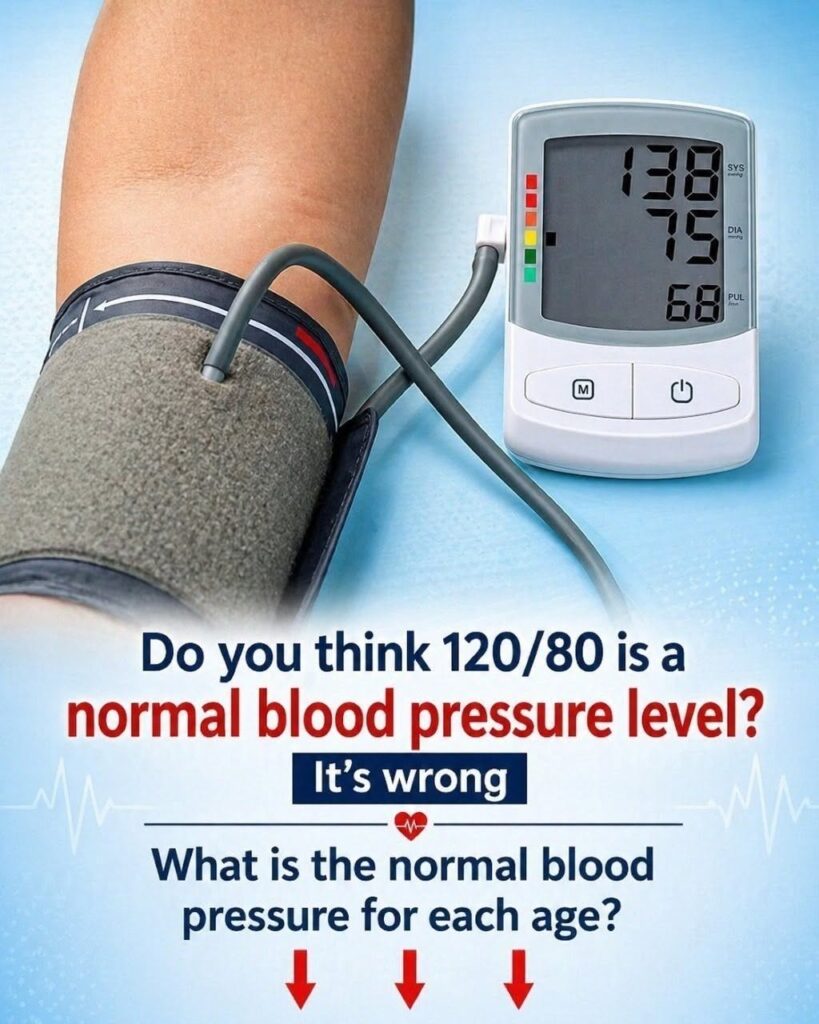

Normal Blood Pressure by Age
There isn’t a different “normal” blood-pressure number for every age. For adults, blood-pressure categories generally don’t change simply because you get older. What matters is the repeated measurement and the person’s overall health.
Blood pressure is written as systolic/diastolic (mmHg).
| Age | General reference |
|---|---|
| Children | Depends on age, sex, and height; pediatric charts are used |
| Teens | Pediatric/adolescent criteria may apply; adult criteria are used in some older adolescents |
| 18–64 | Normal: <120/<80 |
| 65–79 | Normal: <120/<80 as a general reference; individual treatment targets may differ |
| 80+ | No single age-specific “normal”; treatment targets should be individualized |
Adult Blood Pressure Categories
Using commonly used U.S. clinical categories:
-
Normal: less than 120/80
-
Elevated: systolic 120–129 and diastolic less than 80
-
High blood pressure, stage 1: 130–139 or 80–89
-
High blood pressure, stage 2: 140 or higher or 90 or higher
-
Severe hypertension: over 180 and/or over 120
A diagnosis generally shouldn’t be made from one isolated reading. Blood pressure varies with stress, activity, caffeine, pain, medications, and even how the measurement is taken.
For Older Adults
A common misconception is that 140/90 is “normal” once you’re over 60 or 70. Age can influence blood pressure and treatment decisions, but a high reading shouldn’t simply be dismissed as normal aging. Your clinician may choose a treatment target based on your health, medications, frailty, and other conditions.
🚨 When It’s an Emergency
If your reading is 180/120 or higher, repeat it after several minutes of quiet rest.
If it remains that high and you have chest pain, shortness of breath, weakness/numbness, vision changes, confusion, severe headache, or difficulty speaking, seek emergency medical care immediately.
Bottom line: For most adults, below 120/80 mmHg is the usual reference for normal blood pressure, regardless of whether you’re 40, 60, or 80. A pattern of elevated readings is more important than a single number.