
What Does the
Color of Your Urine Say About Your Health?
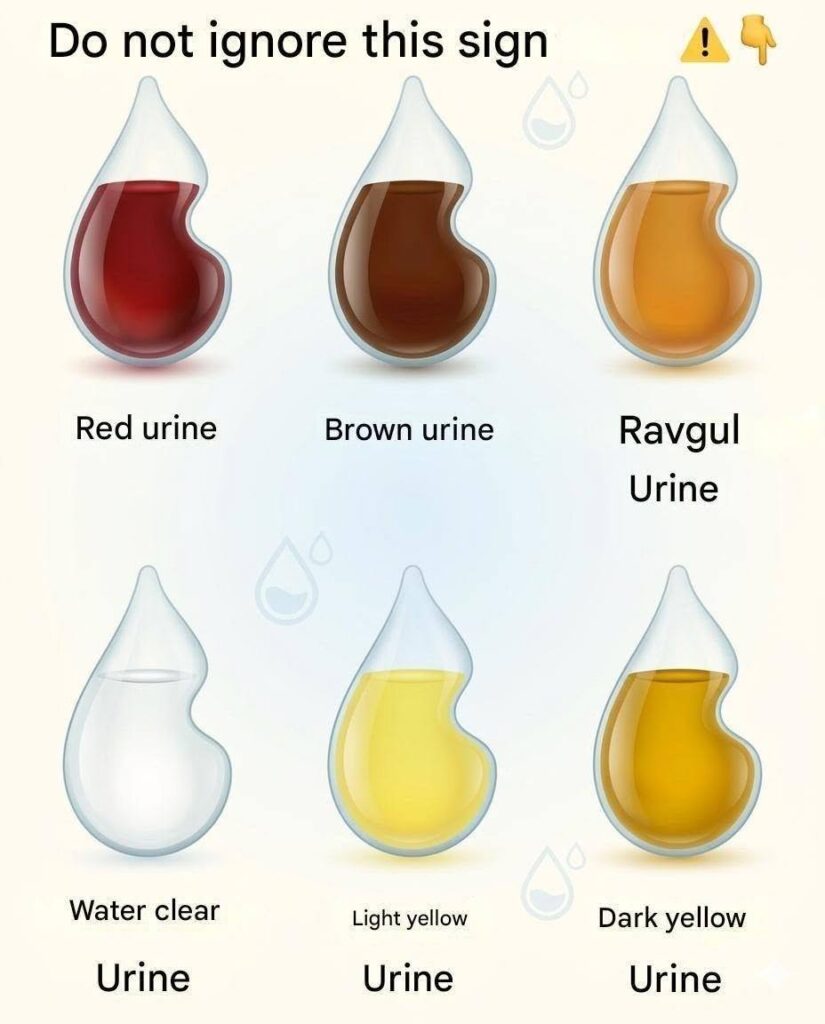
Urine color can provide useful clues about hydration and certain health conditions, but color alone cannot diagnose a disease. Medications, supplements, foods, and the amount of water you drink can all change urine color.
1. Pale Yellow — Usually Normal
Pale yellow or straw-colored urine is generally associated with adequate hydration.
The exact shade varies throughout the day, so there is no need to force yourself often occurs when urine is more concentrated, such as after sweating, exercising to keep your urine completely clear.
2. Dark Yellow — You May Need More Fluids
Dark yellow or amber urine often occurs when urine is more concentrated, such as after sweating, exercising, or going several hours without drinking.
Drinking water normally should gradually make it lighter.
3. Completely Clear — Possibly Too Much Water
Very clear urine can simply mean you’ve been drinking plenty of fluids.
If your urine is consistently colorless and you’re also extremely thirsty or urinating unusually frequently, however, discuss these symptoms with a healthcare professional.
4. Orange — Several Possible Causes
Orange urine can occur with dehydration or certain medications.
It can occasionally be associated with problems involving the liver or bile ducts, particularly if you also notice yellowing of the skin or eyes, pale stools, or abdominal symptoms.
5. Pink or Red — Don’t Ignore It
Blood in the urine can make it appear pink, red, or cola-colored.
Possible causes include urinary infections, kidney stones, prostate problems, medications, and kidney or urinary-tract conditions.
Some foods, such as beets, can also temporarily make urine reddish.
Unexplained blood in the urine should be medically evaluated.
6. Brown or Cola-Colored — Needs Attention
Very dark brown urine can occur with significant dehydration, certain medications, liver problems, or the presence of muscle breakdown products.
If brown urine persists or occurs with severe muscle pain, weakness, jaundice, or feeling seriously unwell, seek medical care promptly.
7. Blue or Green — Often Medication or Food Related
Blue or green urine is uncommon but can result from certain medications, dyes, supplements, or food coloring.
Some urinary infections can also produce unusual colors.
If you can’t identify an obvious cause, have it checked.
8. Cloudy or Milky Urine
Cloudy urine can result from crystals, dehydration, mucus, or other harmless causes.
However, cloudy urine accompanied by burning during urination, frequent urination, fever, pelvic pain, or a strong unpleasant odor may occur with a urinary tract infection.
9. Foamy or Very Frothy Urine
Occasional bubbles are usually not concerning and can result from the speed of urination or toilet water.
Persistent, unusually frothy urine, particularly if accompanied by swelling around the eyes, feet, or ankles, can indicate excess protein in the urine and deserves medical evaluation.
10. Strong-Smelling Urine
Urine can temporarily smell stronger after certain foods, supplements, or when you’re dehydrated.
A persistent strong or unusual odor combined with urinary symptoms may warrant evaluation for an infection or another condition.
When to Get Medical a change persists or occurs together with other symptoms, a urine test and medical evaluation are much more reliable than color alone. Help
Seek prompt medical advice for:
-
Unexplained blood in the urine
-
Persistent brown or very dark urine
-
Urine changes accompanied by severe pain
-
Fever with urinary symptoms
-
Difficulty or inability to urinate
-
Persistent foamy urine with swelling
-
Yellow skin or eyes alongside dark urine
Bottom Line
Pale yellow urine is generally normal, while darker urine often means it is more concentrated. Red, brown, persistently cloudy, or unusually foamy urine can have medical causes and shouldn’t automatically be dismissed.
Remember that urine color is only one clue. If a change persists or occurs together with other symptoms, a urine test and medical evaluation are much more reliable than color alone.