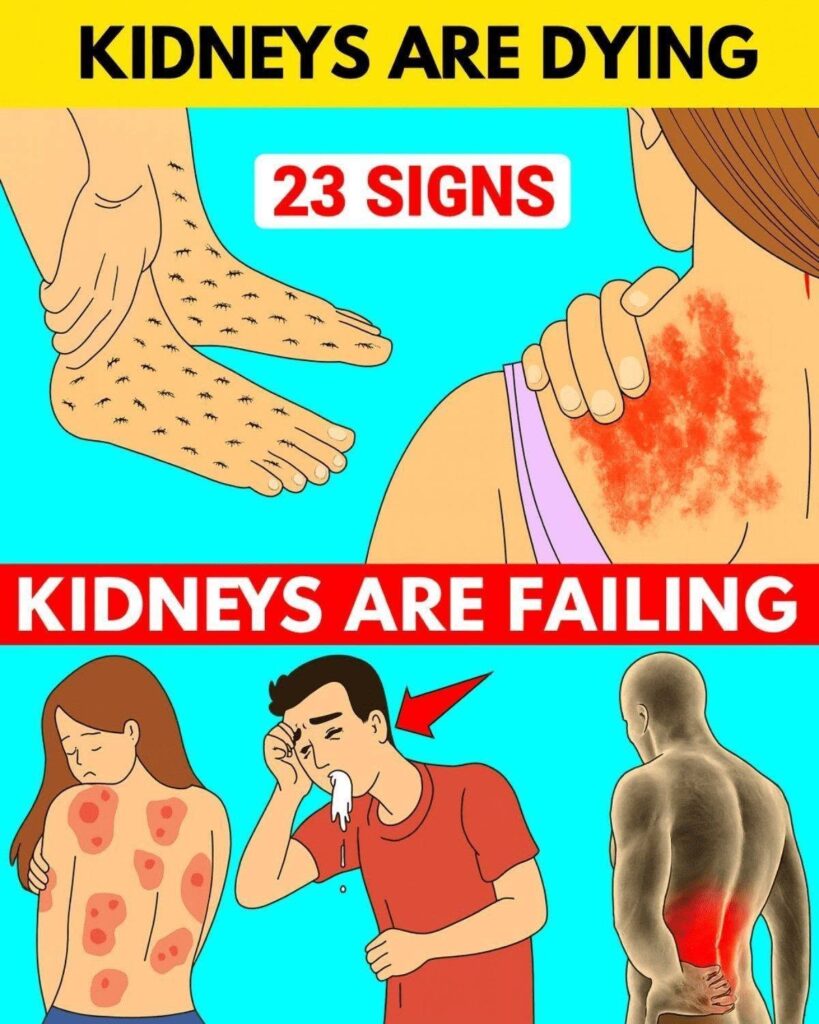

23 Strange Signs Your Kidneys Might Be in Trouble
Kidney disease can develop gradually and may cause few or no symptoms in its early stages. Many symptoms associated with kidney problems are also caused by other conditions, so having one of these signs does not necessarily mean your kidneys are failing.
1. Changes in Urination
Needing to urinate much more or less often than usual can sometimes occur with kidney problems.
2. Foamy or Frothy Urine
Persistent excessive foam can sometimes indicate protein in the urine, which may be a sign of kidney damage.
3. Blood in the Urine
Pink, red, or cola-colored urine can have several causes, including kidney disease, stones, urinary infections, and other conditions. It should be medically evaluated.
4. Swelling in the Legs or Ankles
Damaged kidneys may have difficulty removing excess salt and fluid, potentially causing swelling around the feet, ankles, or legs.
5. Puffy Eyes
Swelling around the eyes, particularly in the morning, can sometimes occur when protein is leaking into the urine.
6. Unexplained Fatigue
Kidney disease can contribute to anemia and the accumulation of waste products, which may cause persistent tiredness or weakness.
7. Difficulty Concentrating
Advanced kidney disease can cause problems with concentration, alertness, or mental clarity.
8. Persistent Itching
Severe or persistent itching can occur in advanced kidney disease because waste products and mineral imbalances can affect the skin and nerves.
9. Dry or Itchy Skin
Kidney disease can be associated with changes in skin moisture and mineral balance, particularly in later stages.
10. Muscle Cramps
Electrolyte and mineral disturbances associated with reduced kidney function can contribute to muscle cramps or weakness.
11. Nausea
As kidney function becomes severely reduced, waste products can accumulate in the blood and cause nausea or loss of appetite.
12. Loss of Appetite
Reduced appetite can occur in advanced kidney disease, although many other illnesses can cause it as well.
13. Metallic Taste
Some people with advanced kidney disease experience changes in taste or a metallic taste in the mouth.
14. Bad Breath
Waste buildup in severe kidney disease can sometimes produce an unusual ammonia-like or unpleasant breath odor.
15. Sleep Problems
Kidney disease can be associated with poor sleep, restless legs, itching, and other symptoms that interfere with nighttime rest.
16. Shortness of Breath
Kidney problems can contribute to fluid accumulation, including fluid in or around the lungs, which may cause breathlessness.
Shortness of breath has many other possible causes and shouldn’t automatically be attributed to the kidneys.
17. High Blood Pressure
The kidneys play an important role in controlling blood pressure. Kidney disease can contribute to hypertension, while long-standing high blood pressure can also damage the kidneys.
18. Feeling Cold or Weak
Anemia associated with chronic kidney disease can cause weakness, tiredness, dizziness, or feeling unusually cold.
19. Headaches or Dizziness
These may occur when kidney disease contributes to anemia or poorly controlled blood pressure, although they are nonspecific symptoms.
20. Changes in Urine Color
Very dark, cloudy, pink, red, or cola-colored urine can have numerous causes. Persistent or unexplained changes should be checked.
21. Pain in the Side or Back
Pain in the flank area can occur with kidney stones, infections, or other kidney-related problems, although ordinary feet, ankles, hands, or face can indicate fluid retention and warrants medical assessment, particularly when accompanied by changes back pain is much more commonly caused by muscles and the spine.
22. Swelling That Becomes Persistent
Increasing swelling of the feet, ankles, hands, or face can indicate fluid retention and warrants medical assessment, particularly when accompanied by changes in urination or breathlessness.
23. No Symptoms at All
This may be the most important sign—or rather, the absence of signs.
Early chronic kidney disease frequently produces no obvious symptoms. Someone can have reduced kidney function while feeling completely well.
That’s why people at increased risk—such as those with diabetes, high blood pressure, cardiovascular disease, or a family history of kidney disease—may need periodic kidney testing.
How Are Kidney Problems Checked?
Symptoms alone aren’t enough to determine kidney function. Healthcare professionals commonly use:
-
Blood tests, including creatinine and estimated glomerular filtration rate (eGFR)
-
Urine tests, including checking for albumin or protein
-
Blood-pressure measurements
-
Additional imaging or testing when appropriate
When to Seek Urgent Care
Seek prompt medical attention for blood in the urine, severe flank pain, inability to urinate, severe swelling, significant shortness of breath, confusion, or rapidly worsening symptoms.
Bottom Line
Kidney disease can cause changes in urination, swelling, fatigue, itching, nausea, and other symptoms—but many of these signs have other explanations. You cannot reliably diagnose kidney disease from symptoms alone.
If you’re concerned about your kidneys, a simple blood and urine evaluation can often provide much more useful information than trying to identify a particular symptom.