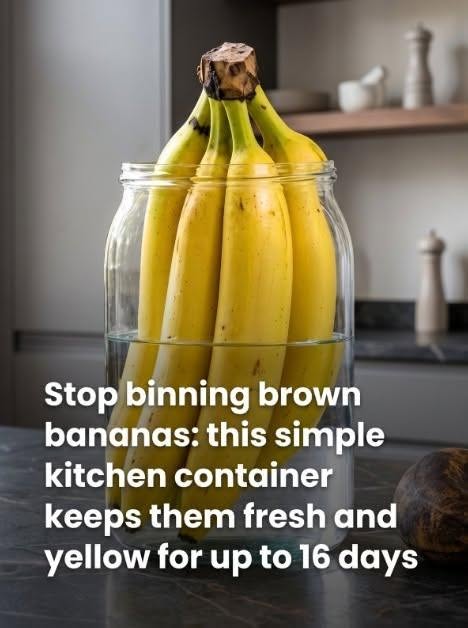

Bananas Lasting 16 Days? Learn the Simple Trick!
Bananas naturally produce ethylene, a plant hormone that speeds up ripening. You can’t stop the process completely, but a few storage techniques can slow it down and help bananas stay usable longer.
The Simple Trick: Wrap the Stems
Wrap the crown/stem ends of individual bananas with a small piece of plastic wrap.
Why It May Help
The banana’s crown releases a significant amount of ethylene. Covering the stems can reduce the movement of ethylene around the fruit and may slow ripening.
How to Do It
-
Separate the bananas from the bunch if you want to slow ripening individually.
-
Wrap the stem/crown of each banana tightly with plastic wrap.
-
Keep them in a cool, dry place away from direct sunlight.
-
Check them regularly for bruising or spoilage.
-
Once they reach your preferred ripeness, you can refrigerate them to slow further ripening.
Another Useful Trick: Refrigeration
Once bananas are ripe, putting them in the refrigerator can extend their usable life. The peel may turn dark brown or black, but the inside can remain good for several additional days.
Does This Really Make Them Last 16 Days?
Not necessarily. “16 days” isn’t a guaranteed result. Storage time depends on how ripe the bananas were when purchased, temperature, humidity, variety, bruising, and other conditions.
The stem-wrapping technique can help slow ripening, but it shouldn’t be treated as a guaranteed 16-day preservation method.
Best Combination
For maximum practical shelf life:
Buy slightly green bananas → wrap the stems → keep them away from heat and sunlight → refrigerate once ripe.
Discard bananas if you notice mold, a leaking or fermented appearance, or an unpleasant off smell, rather than relying only on the color of the peel.