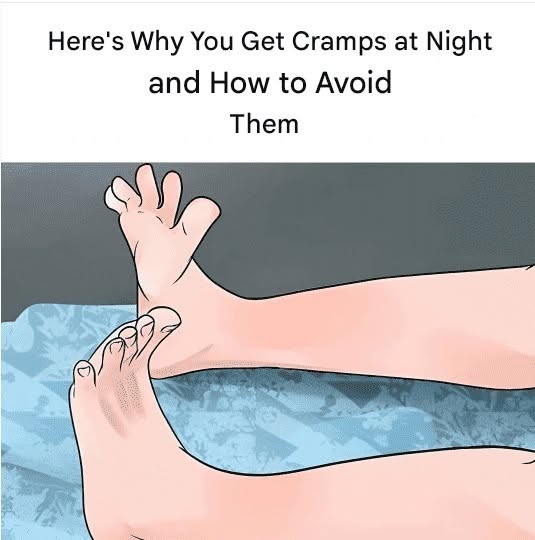

This Is Why We Get Cramps at Night
Nighttime leg cramps are sudden, involuntary muscle contractions that commonly affect the calves, feet, or thighs. They can be painful and may wake you from sleep. Although the exact cause is not always clear, several factors can make them more likely.
1. Muscle Fatigue
Overusing the muscles during the day, especially through prolonged walking, standing, or exercise, can contribute to nighttime cramps.
2. Dehydration
Not getting enough fluids may contribute to muscle discomfort and cramping, particularly after sweating heavily.
3. Staying in One Position
Keeping your legs in the same position for a long time can sometimes contribute to nighttime muscle cramps.
4. Certain Medications
Some medications, including certain diuretics and other medicines, can be associated with muscle cramps. If cramps began after starting a new medication, discuss it with your doctor rather than stopping the medicine yourself.
5. Low Levels of Certain Nutrients
Low levels of minerals such as magnesium, potassium, or calcium can sometimes contribute to muscle problems. However, taking supplements is not automatically the answer because cramps have many possible causes.
What Can Help During a Cramp?
Gently stretch the affected muscle and massage it. For a calf cramp, slowly straighten the leg and gently pull the toes toward you. Standing and putting gentle weight on the affected leg may also help.
Regular stretching, adequate hydration, and comfortable footwear may reduce cramps for some people.
When to Get Medical Advice
Frequent or severe cramps deserve medical attention, especially if they are accompanied by leg swelling, weakness, numbness, skin changes, or significant pain. Persistent cramps can sometimes be associated with circulation problems, nerve conditions, medication effects, or other health issues.
Bottom line: Nighttime cramps are often related to muscle fatigue, dehydration, prolonged positioning, medications, or other underlying factors. They are common, but frequent or worsening cramps should not simply be dismissed as a normal part of aging.